Hato Workshop
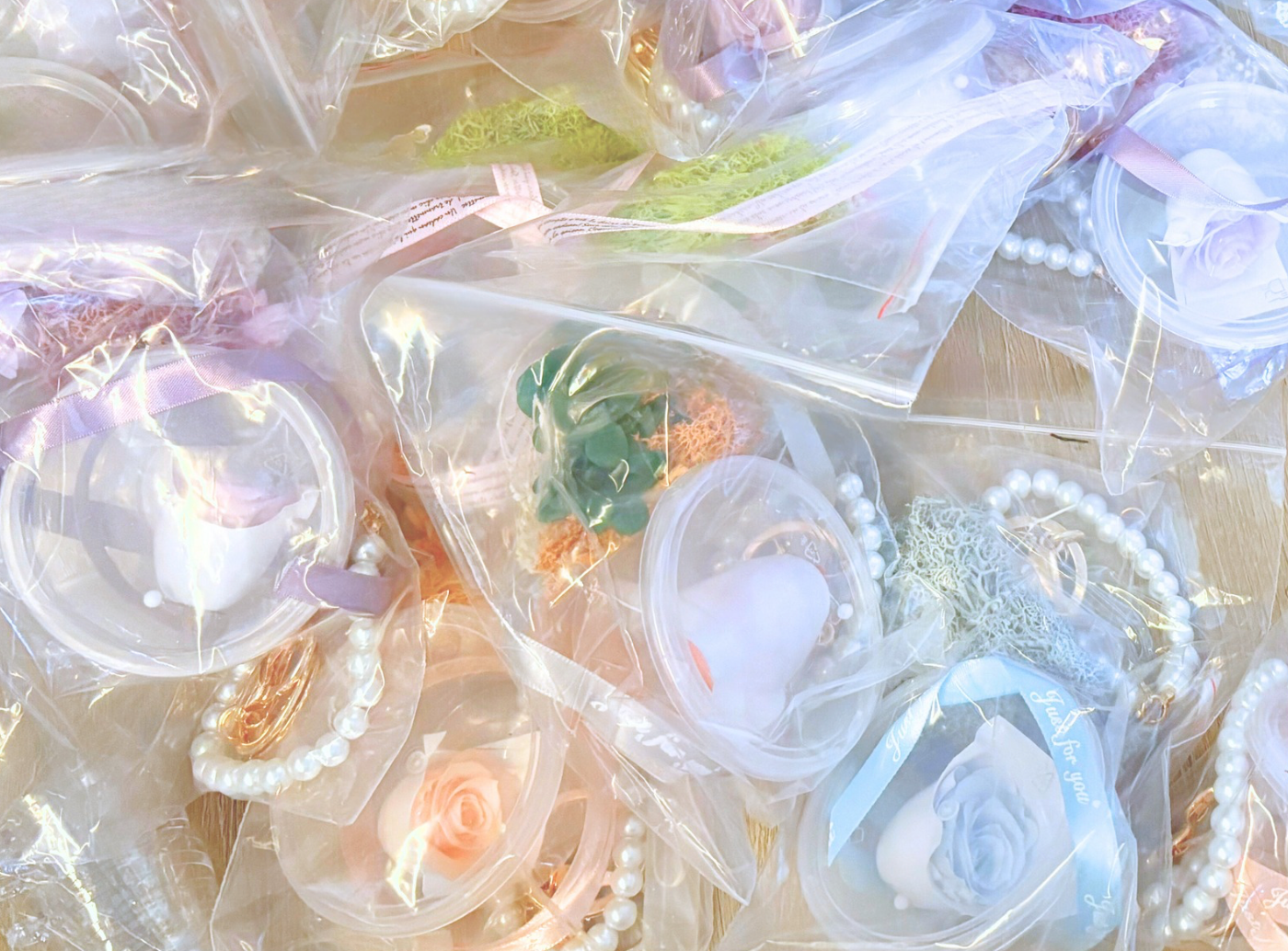
Preserved Flower Keychain DIY Material Kit | Rose | Pink&Green
Preserved Flower Keychain DIY Material Kit | Rose | Pink&Green
Regular price
HK$58.00
Regular price
HK$62.00
Sale price
HK$58.00
Unit price
per
Shipping calculated at checkout.
Couldn't load pickup availability
A. Product Information
Difficulty: ★☆☆☆☆
Production time: Approximately 45 minutes
Diameter: Approximately 4cm
Material kit: A pack of preserved flowers, glue, ribbon, keychain ring, faux pearl ribbon
*The actual product may have color differences due to lighting
*This product is a material kit and requires self-assembly
*We use natural floral materials; some materials may be substituted due to seasonal availability, and there may be slight differences in color and shape
Customer Service: Whatsapp +852 6104 5134
B. Production Tutorial
PDF Tutorial Click Here
Detailed Tutorial:
Simplified Tutorial:

Steps:


C. Purpose of the Activity
| Target Audience | A. Learning & Training | B. Benefits & Development |
|---|---|---|
| Elderly | 1. Train fine motor skills: Maintain hand dexterity through gluing and assembly, delaying physical decline. 2. Activate the brain: Planning layouts and color matching helps stimulate senses and cognition, preventing cognitive decline. |
1. Enhance intergenerational relationships: The finished product can be gifted to family members or grandchildren, acting as a bridge for emotional connection. 2. Establish social connections: Creating items in community centers or group activities provides opportunities for social interaction and alleviates loneliness. |
| Children | 1. Develop small muscles and hand-eye coordination: Practice basic movements such as gripping, aligning, and gluing. 2. Basic aesthetics and creativity enlightenment: Learn basic color matching and composition, and recognize the textures of different materials. |
1. Cultivate patience and concentration: Requires focus for about 30 minutes to complete a piece, building a sense of accomplishment in "completing a task from start to finish." 2. Learn to express heart: The finished product can be gifted to parents or teachers, learning to convey emotions through handcrafts. |
| Youth | 1. Experience the craft design process: From understanding materials to conceptualizing layouts and hands-on production, gain insight into the product creation process. 2. Application of spatial and color theory: Arranging floral materials in a limited circular space is a practical application of textbook knowledge. |
1. Relieve academic stress: Provides a creative channel outside of studies, acting as a medium for Art Therapy to help balance body and mind. 2. Build personal style and identity: Create unique, personalized accessories to showcase taste and assist in the building of self-identity. |
| Adults | 1. Learn new leisure skills: Master a handicraft skill quickly outside of a busy life to discover new personal interests. 2. Train focus and decision-making skills: Practice making the best decisions for the layout within a short time. |
1. Achieve Mindfulness: Focusing on the crafting process helps calm the mind and provides a temporary escape from work and life stressors. 2. Create a sense of ritual in life: Use handmade items to decorate life, enhancing daily aesthetics and personal quality of life. |
D. FAQs During Production
| Category | Common Problems | Solutions |
|---|---|---|
| Material Handling | 1. "What are preserved flowers? Are they real? Why are they so fragile?" 2. "I accidentally broke the petals, what should I do?" 3. "I don't like the colors/styles in the kit." |
1. Explanation: Preserved flowers are real flowers processed with special technology to retain their appearance and texture while removing moisture, making them more delicate and requiring gentle handling. 2. Reassurance & Suggestion: This is normal; small petal fragments can sometimes fill gaps to create different effects. If heavily damaged, check if there are spare flower materials for repair. 3. Encouraging Creativity: The kit is pre-curated; participants are encouraged to be creative based on existing materials to make a unique piece. |
| Design & Aesthetics | 1. "I have no idea how to start arranging." 2. "How can I make the flowers look three-dimensional/good?" 3. "My design looks messy/empty." |
1. Provide SOP: We suggest "from big to small, from main to secondary." Place the largest flower in the visual center first, then use small flowers and fillers to surround it. 2. Teach techniques: Try "dry arranging" on the base without glue first. Once satisfied with the layout, take a photo and then glue them piece by piece. Remind them that flowers have height differences; adjust the angle slightly when gluing to create layers. 3. Give advice: "Negative space" is also a form of aesthetics; it doesn't have to be completely filled. If it feels messy, reduce the number of materials and focus on the main flower for a cleaner design. |
| Glue Usage | 1. "I squeezed too much glue, it's overflowing!" 2. "The glue doesn't seem to hold, the flowers keep falling off." 3. "Glue got on areas I didn't want (like the petal surface)." |
1. Prevention & Remedy: Suggest using a toothpick or thin stick to apply a small amount of glue. If it overflows, use a cotton swab or the corner of a tissue to carefully wipe it away before it dries. 2. Guide correct usage: Ensure both surfaces are clean and dust-free. After applying glue, gently press the flower onto the base and hold for 15-30 seconds to allow the glue to set. 3. Cleanup: If the glue is wet, wipe carefully. If it has formed a film, try using tweezers to peel it off. If it cannot be removed, console the participant that it is a unique mark of a handmade item. |
| Assembly | 1. "How do I tie the ribbon to the keychain?" 2. "How do I fix the faux pearl ribbon?" 3. "Everything is glued, but it doesn't feel sturdy enough." |
1. Demonstration: Provide a demonstration or diagram of the simplest "Lark's Head Knot" for a secure and beautiful result. 2. Clear instructions: Guide participants to thread the pearl ribbon through the designated small hole or ring, tie a firm knot, and hide the knot in an inconspicuous spot. 3. Final check: Instruct participants to gently tug on each part after completion to check for looseness. Use a toothpick to add a little glue to any weak points for reinforcement. |
| Care & Maintenance | 1. "Can this keychain get wet?" 2. "Will the flowers fade or lose shape easily?" |
1. Clear notice: Absolutely not. Preserved flowers are very sensitive to water and humidity, which can cause petals to become translucent or moldy. Remind them to keep it dry. 2. Provide care advice: Avoid direct sunlight, which accelerates fading. Also, avoid frequent friction and squeezing to ensure the longevity of the finished product. |