Hato Workshop
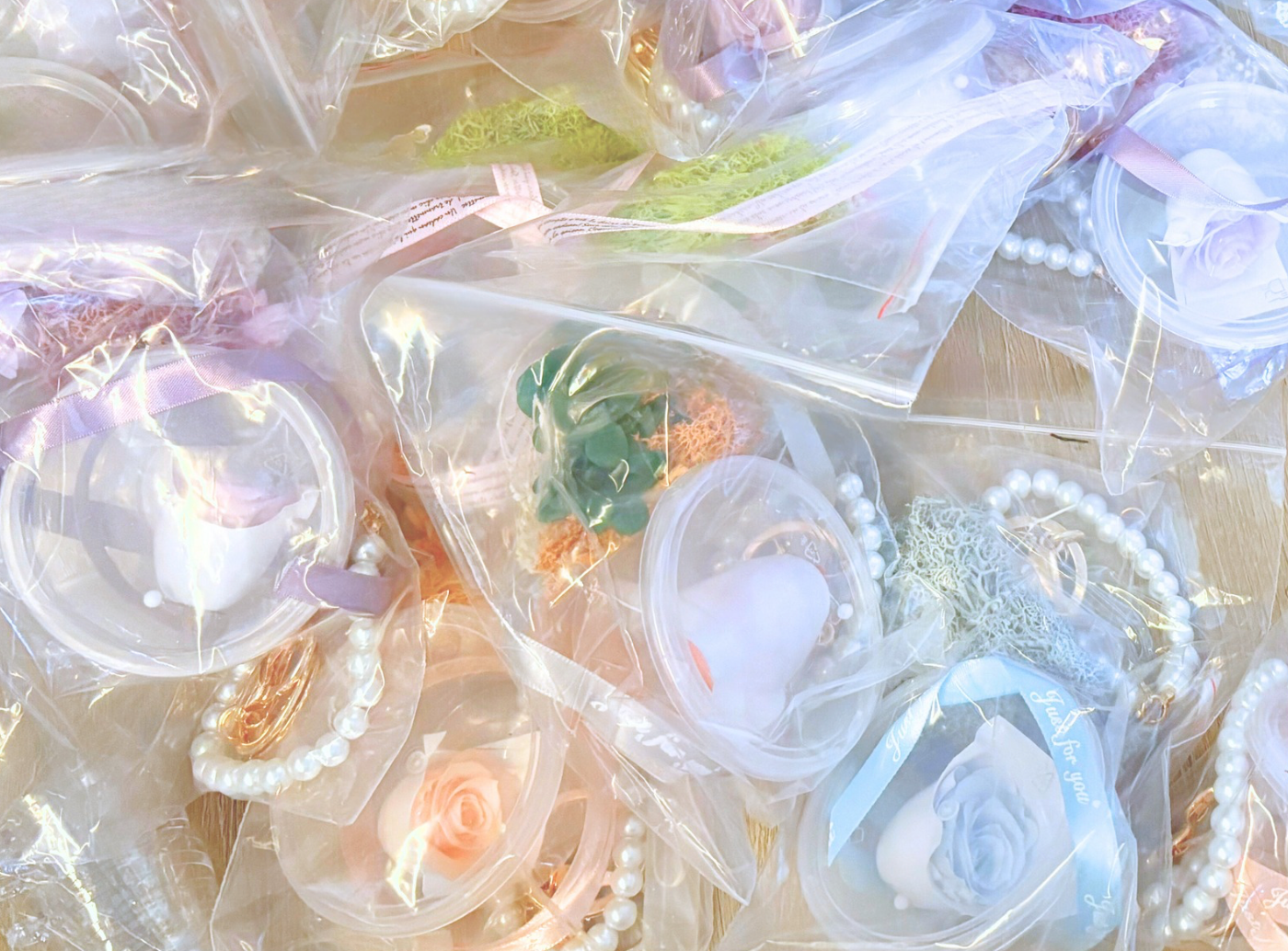
Preserved Flower Keychain DIY Material Kit | Rose | Flesh Color
Preserved Flower Keychain DIY Material Kit | Rose | Flesh Color
Regular price
HK$58.00
Regular price
HK$62.00
Sale price
HK$58.00
Unit price
per
Shipping calculated at checkout.
Couldn't load pickup availability
A. Product Information
Difficulty: ★☆☆☆☆
Production time: Approximately 45 minutes
Diameter: Approximately 4cm
Material Kit: One pack of preserved flowers, glue, ribbon, keychain ring, faux pearl string
*The actual product may have color differences due to lighting
*This product is a material kit and requires self-assembly
*We use natural flower materials; some materials may be substituted due to seasonal availability, and there may be slight differences in color and shape
Customer Service: Whatsapp +852 6104 5134
B. Production Tutorial
PDF Tutorial Click Here
Detailed Tutorial:
Simplified Tutorial:

Production Steps:


C. Purpose of Production
| Target Group | A. Learning & Training | B. Benefits & Development |
|---|---|---|
| Elderly | 1. Train Fine Motor Skills: Through steps like sticking and assembling, maintain hand flexibility and delay functional decline. 2. Activate the Brain: Thinking about layout and color matching helps stimulate senses and cognition, preventing cognitive decline. |
1. Enhance Intergenerational Relationships: Finished products can be gifted to family members or grandchildren, becoming a bridge for emotional connection. 2. Build Social Connections: Making it in community centers or group activities provides opportunities for social interaction and alleviates loneliness. |
| Children | 1. Develop Small Muscles & Hand-Eye Coordination: Practice basic movements like grasping, aligning, and sticking. 2. Basic Aesthetics & Creative Enlightenment: Learn basic color matching and composition, and recognize the texture of different materials. |
1. Cultivate Patience & Concentration: Focus on completing a work within about 30 minutes, building a sense of success from "completing a task from start to finish." 2. Learn to Express Affection: The finished product can be given as a gift to parents or teachers, learning to convey feelings through handiwork. |
| Teenagers | 1. Experience Craft Design Process: From material recognition and layout conception to hands-on production, understand the basic process of a product's birth. 2. Application of Spatial Awareness & Color Theory: Arranging flower materials within a limited circular space is a practical application of textbook knowledge. |
1. Release Academic Stress: Provides a creative channel outside of schoolwork, serving as a medium for Art Therapy to help balance body and mind. 2. Build Personal Style & Identity: Create unique, personalized accessories to showcase taste, helping with the establishment of self-identity. |
| Adults | 1. Learn New Leisure Skills: Beyond busy life, quickly master a craft skill and discover new personal interests. 2. Train Concentration & Decision-Making Ability: Practice making the best decisions for the layout of the work in a short time. |
1. Achieve Mindfulness: Focusing on the process of handcrafting helps calm the mind and temporarily distance oneself from the hustle and bustle of work and life. 2. Create a Sense of Ritual in Life: Use handmade items to embellish life, enhancing daily aesthetics and personal quality of life. |
D. Common Problems During Production
| Question Type | Possible Problems | Solutions |
|---|---|---|
| Material Handling & Recognition | 1. "What are preserved flowers? Are they real? Why are they so fragile?" 2. "I accidentally broke the petals, what should I do?" 3. "I don't like the colors/styles of the flowers in the material kit." |
1. Explanation: Preserved flowers are real flowers processed with special technology, retaining the look and texture of fresh flowers but with moisture removed, so they are more fragile and require gentle handling. 2. Reassurance & Suggestion: This is a normal phenomenon; small petal fragments can sometimes be used to fill gaps, creating a different effect. If significantly damaged, check if there are spare small flower materials for repair. 3. Encourage Creativity: The material kit is well-matched; participants are encouraged to be creative based on existing materials to create unique works. |
| Design & Aesthetics | 1. "I have no idea at all, I don't know how to start arranging." 2. "How can I arrange the flowers to look three-dimensional/good?" 3. "My design looks messy/very empty." |
1. Provide SOP: Recommend "from large to small, from primary to secondary." Place the largest main flower in the visual center first, then use small flowers and fillers to surround it to fill the gaps. 2. Teach Techniques: You can "test place" on the base first without glue, and take a photo after you are satisfied with the layout before sticking one by one. Remind that flowers themselves have height, so you can slightly adjust the angle when sticking to create a sense of layering. 3. Give Advice: "Blank space" is also an aesthetic; you don't have to fill the space completely. If it feels messy, you can reduce the amount of floral materials and focus on the main flower to make the design cleaner. |
| Glue Application Skills | 1. "Too much glue was squeezed out, it overflowed!" 2. "The glue doesn't seem to stick well, the flowers keep falling off." 3. "Glue got on places I didn't want it (like the surface of the petals)." |
1. Prevention & Remedy: It is recommended to use a toothpick or a thin stick to help apply a small amount of glue. If it has overflowed, carefully wipe it off with a cotton swab or the corner of a tissue before it dries. 2. Instruction on Correct Usage: Ensure both surfaces being glued are clean and dust-free. After applying glue, gently press the flower material onto the base and hold for about 15-30 seconds to allow the glue to develop initial tackiness. 3. Handling Method: If the glue is not dry, it can be carefully wiped off. If a film has formed, try to carefully remove it with tweezers. If it cannot be removed, reassure the participant that this is a unique trace of handiwork. |
| Assembly & Fixing | 1. "How do I tie the ribbon to the keychain ring?" 2. "How to fix the faux pearl string?" 3. "Everything is stuck, but it doesn't feel secure enough." |
1. Demonstration: Demonstrate in person or provide diagrams to teach the simplest "Lark's Head Knot," which is both beautiful and secure. 2. Clear Instructions: Instruct participants to thread the end of the pearl string through the designated small hole or buckle, tie a secure knot, and hide the knot in an inconspicuous place. 3. Final Check: Instruct participants to gently pull each component after finishing to check for looseness. Add a little glue to any insecure connection points with a toothpick for reinforcement. |
| Product Maintenance | 1. "Can this keychain get wet?" 2. "Will the flowers fade or deform easily?" |
1. Clear Warning: Absolutely not. Preserved flowers are very afraid of water and moisture, which will cause the petals to become transparent or moldy. Remind to keep them dry. 2. Provide Maintenance Advice: Avoid prolonged direct sunlight, otherwise it will accelerate fading. In addition, avoid frequent friction and squeezing, which can make the finished product last longer. |